
A room of my own
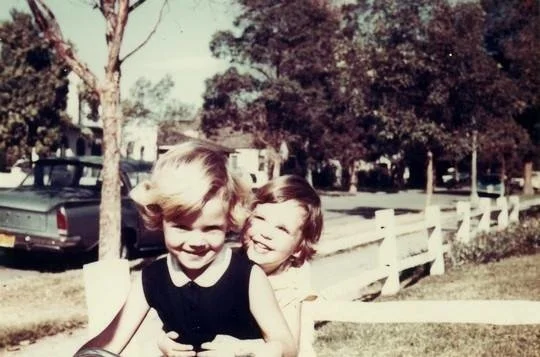
Here, my sister and I share a bike—more happily than we shared a bedroom.
My lifelong passion for interior design ignited when I was seven. My sister and I shared a bedroom at the time, and the arrangement was not without squabbles. Then one day, my mom came home from the thrift store with an old privacy screen. A new age had dawned.
My sister and I would have our own rooms—one-half each of the bedroom that we shared. I would lie awake pondering the perfect spots for my twin bed and bureau. I couldn’t wait to fuss over my room. It would be a refuge where I could think my own thoughts and hear my own voice.
The screen was erected. During our mandated afternoon naps, I wrote and illustrated my first book. I called it LOST. It told the story of a girl who was shipwrecked on an island and survives by making friends with the animals. My mom said she kept it. I keep hoping I'll find it in the house someday.
Why We Need Personal Space
Healthy mental functioning requires space to think one’s own thoughts and express them and build a relationship with oneself. In childhood and adolescence, the essential developmental tasks are to build autonomy (or the experience of oneself as separate from one’s primary caregiver) and self-efficacy (or confidence in one’s ability to exert control over one’s own motivation, behavior, and social environment).
These are fundamental building blocks of a healthy personality. They’re essential to resilience, focus, critical thinking, healthy relationships, emotional regulation, self-discipline, problem-solving, creativity, a sense of mastery—in short, everything that equips us to handle life’s challenges and thrive.
We Also Need One Another
At the same time, we all need social support—the acceptance, encouragement, stimulation, and learning that we give to others and others give to us. We need safe spaces, and we need the confidence to leave our safe space to take risks, to have adventures. We need social support to learn the skills to communicate in constructive ways, however imperfect our efforts might be. That’s how we grow.
From DESIGN FOR YOUR MIND: How a Family Caregiver and Mental Health Therapist Renovated Her Home to Recharge Her Life--and Didn't Break the Bank by Annie Guest
